

When We Stop Performing
Perimenopause, real connection, and the women who didn’t leave

The internet knows I’m a woman in my 40s.
When I open Instagram, (which honestly isn’t often these days because Substack is winning my heart) I’m flooded with ads about how to optimize my health.
Things like getting enough protein, sleep hygiene, how to stop hot flashes, nervous system regulation, hormones, strength training, Keto …
As someone who suffered debilitating symptoms at the beginning of perimenopause, a lot of this information has been life changing for me. So I’m not bashing it.
I’m grateful that peri/menopause is finally being talked about and we’re getting resources that our mothers never had. Even since I began this journey about 4 years ago, I’ve seen a huge surge in these conversations, which is Ah-MAZING!
Still, I’ve noticed that many women seem exhausted in ways that more strategies to optimize our health can’t fix.
We spend years becoming the person we think we’re supposed to be. The one who holds everything together and makes everything better for everyone else. We push through headaches and answer texts when we’re tired.
But then one day our tolerance for performing starts to fade.
We stop wanting to listen to people talk at us for two straight hours or we find ourselves screaming in the car on our drive home because the resentment we’ve bottled up inside needs somewhere to go.
Lately I keep hearing women say versions of the same sentence.
“I don’t know what’s happening to me.”
Our bodies are suddenly unpredictable and don’t respond to diet and exercise the way they used to. And the version of us who could hold everything together for everyone else doesn’t work the same way anymore either.
Most of us have spent decades building toward the career, family and the version of ourselves that looks competent and put together from the outside.
We assume that with all that effort, we’ll eventually arrive at a permanent state of having everything figured out.
Then, finally when we think we’re getting close, everything starts falling apart.
What makes it even worse is thinking that we’re the only one experiencing these things so there must be something wrong with us.
We end up feeling ashamed, so we hold it inside and pretend we’re fine.
Then we turn to a podcast or YouTube or we buy the latest solution from an Instagram ad to try to make ourselves feel better. And maybe these things help to a degree.
But we can’t think our way through identity loss or optimize our way out of grief.
Deep down, I think many of us are aching to feel seen. To know that we’re not the only ones falling apart or starting over. We need each other more than ever during this time of life, but the way most of our lives are set up these days can feel so isolating.
Building community while hiding inside it
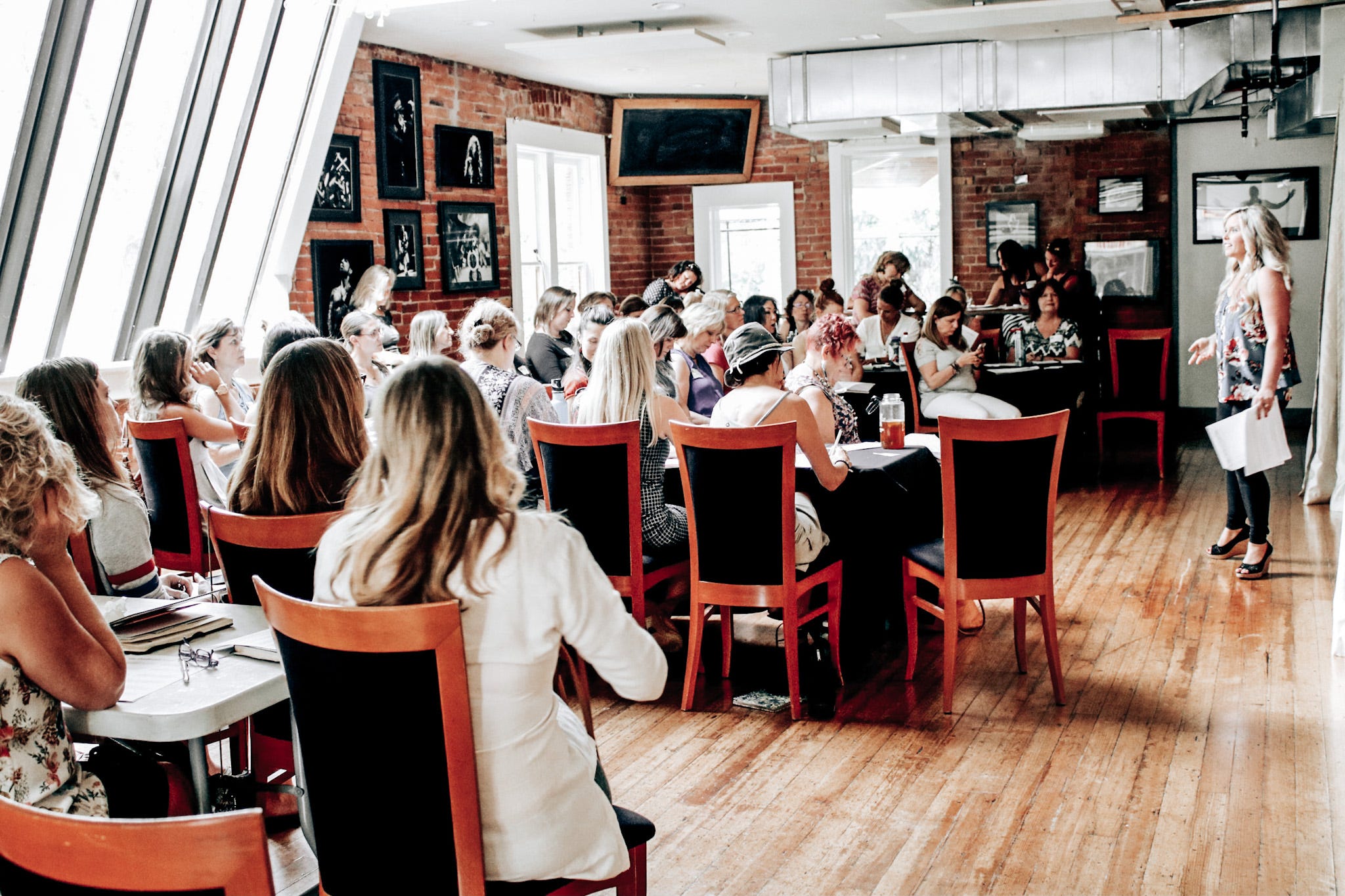
As an only child, loneliness has been a big part of my life experience. I think that’s part of the reason I made building community my full time job when I was in my 20s.
In Boulder, Colorado, I ran a business and networking community called The Daring Fempreneur for over a decade. I held events, workshops, coaching containers and spaces designed to invite women entrepreneurs past surface-level conversations. I believed in the power of women gathering and I still do.
But looking back, I can see how hard I was working to manage myself inside those spaces.
While I wanted to feel part of something and longed to be seen and valued for who I was, I also feared that if people really saw how messy I felt inside that they’d leave.
So I created an outer shell that looked very competent and put together. And I put lots of pressure on myself to always have the right answers.
And while there was some truth to those parts of my personality, there was so much more that the young, scared part of me was keeping hidden because she feared being “found out” and abandoned.
That was a really lonely way of being in community.
I knew how to show up and hold a room and I knew how to facilitate conversations, but I didn’t know how to actually be held by community myself. That is, until perimenopause arrived and everything started to unravel. You can read more about that story here.
Subscribe to be part of our community of women waking up in perimenopause and midlife.
The women who stayed
I reached a point where I could no longer maintain the same level of composure as I used to. Perimenopause shook me to my core. I became depressed and constantly on edge. Between my business burning me out and finding out I didn’t have any eggs left and couldn’t become a mom, I lost my sense of purpose and identity.
When I hit a total rock bottom, I decided to explore something that my younger self never would have imagined. I decided to start working with plant medicine in ceremonial women’s circles.
I remember one ceremony in particular.
We were outside under a canopy draped with vines. There were blankets and pillows spread across the floor and candles tucked into glass jars in the grass. I could feel the warmth of the sunshine on my face as I sat there still armored and still trying, on some level, to be okay.
But then the medicine took all of that away. It removed the option to have my walls up and my performance just stopped. I came completely undone.
I remember crying so hard my face hurt. I tried to stop because part of me still believed that if people saw me this way I’d lose their respect along with the careful image I’d spent decades building.
But there was nowhere to hide.
One woman sat beside me rubbing my back. Someone handed me water and another woman tucked a blanket over my legs after the temperature dropped.
Nobody looked uncomfortable or rushed in with advice.
For most of my life, I assumed closeness depended on how useful or composed I was.
But there I was, sitting in a puddle of tears with tissues everywhere and the people around me came even closer.
For the first time, I felt seen without the masks I thought were protecting me and I discovered the depth of connection that was possible without them.
While my healing started in that ceremony, the transformation happened in the ordinary moments of my regular life afterwards. In the ways I started letting people in and in the patterns I could finally see clearly enough to start working on.
Plant medicine became part of my path through this season of life, and it still is. I continue to work in ceremonial spaces because of how much they’ve changed the way I relate to other people and to the parts of myself I spent years trying to hide and control.
But when I think about that particular ceremony now, what stays with me most is the experience of falling apart in front of other women and discovering nobody turned away.
I think a lot of us fear that if people saw the full extent of our grief, shame, or whatever we’re most afraid will be judged, that they’d leave.
Instead, I found myself surrounded by women who stayed.
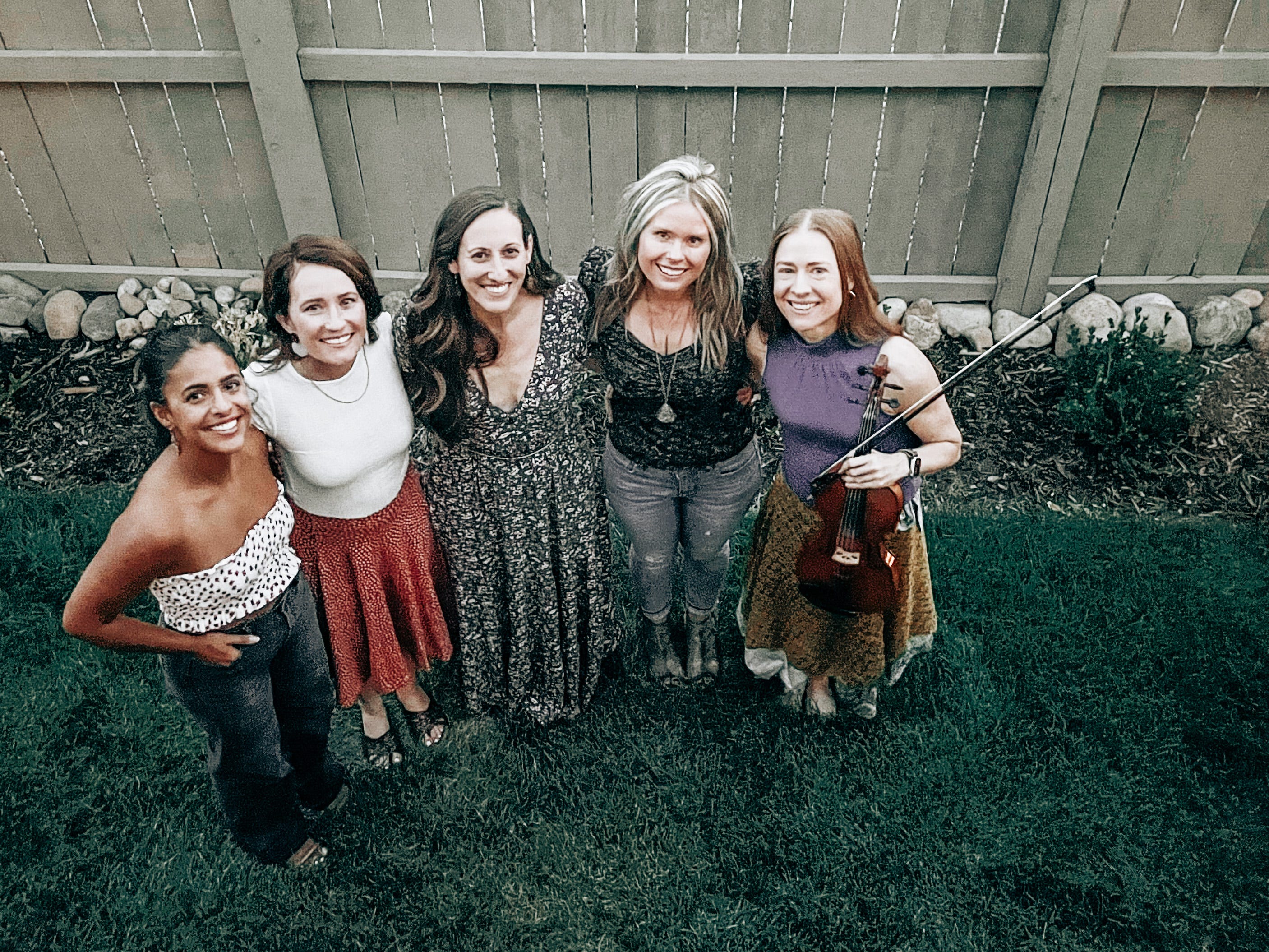
The spaces I want to create now
As I’m stepping back into creating community, this time for women in perimenopause and midlife, I want to do it differently this time.
And to be honest, one of my fears is slipping back into old patterns that I’ve worked so hard to heal.
But now, instead of letting those parts run the show, I have more awareness and tools to bring myself home faster.
I’ve lost interest in being the woman at the front of the room who has everything figured out. I’ve done that and it’s incredibly lonely to be surrounded by people and still somehow separate from them.
I don’t have a finished version of myself to offer. What I have is a commitment to creating spaces where that’s not required of any of us.
I still care about my health. I want good sleep and balanced hormones. A lot of the advice I’ve implemented has made it possible for me to function in my day-to-day life again and I’m very grateful for that.
And I’ve come to believe that advice gets us only so far.
Because when I think about everything that’s helped me through perimenopause, what stands out is a room full of women who stayed when my mask came off.
That’s why I’m creating Alchemy & Ash. A place where you can put down the performance and experience what it’s like when no one turns away.
Invitation to share:
Have you ever had an experience where you let your guard down and people came closer instead of pulling away?
This is such a beautiful and honest reflection. I think so many women reach midlife carrying the accumulated exhaustion of years spent holding everything together, often without realising how much of their identity has become tied to being capable, composed and useful to everyone around them.
I especially resonated with the distinction between being in community and allowing ourselves to be held by community. We can become so skilled at caring for others, creating spaces, offering insight and being the steady one that we forget connection is not only about what we contribute. It is also about whether we feel safe enough to let ourselves be seen when we have nothing polished or helpful to offer.
There is something profoundly healing about discovering that the parts of ourselves we have worked hardest to conceal are not necessarily the parts that make people leave. Sometimes, when the mask comes off, the right people move closer.
Perhaps this is one of the unexpected invitations of midlife: not to optimise ourselves into another more efficient version of womanhood, but to release the performance and find out who remains. And even more importantly, to learn that we are still worthy of love and belonging when we are no longer holding everything together. Thank you. Sharon x
The part that stayed with me was not the discussion about hormones. It was the realization that you could fall apart and people moved closer instead of away.
I think many women spend years believing they have to be strong, capable, and composed to be loved.
What a gift to discover otherwise. 🫶